Paracord
Paracord is a lightweight yet extremely strong nylon cord originally developed for U.S. paratroopers during World War II. The name comes from “parachute cord”. Thanks to its exceptional strength, durability and versatility, it became one of the most widely used elements of survival gear, EDC equipment and military kits. The first version of paracord was patented in the U.S. by Gladding, McBean & Co. in 1938, and since then it has become a standard part of military equipment. Today, it is produced by hundreds of manufacturers worldwide – including high-quality Czech producers specializing in parachute cordage and outdoor accessories. In the survival community, paracord is considered one of the most essential pieces of EDC gear. You can of course get it on our e-shop.
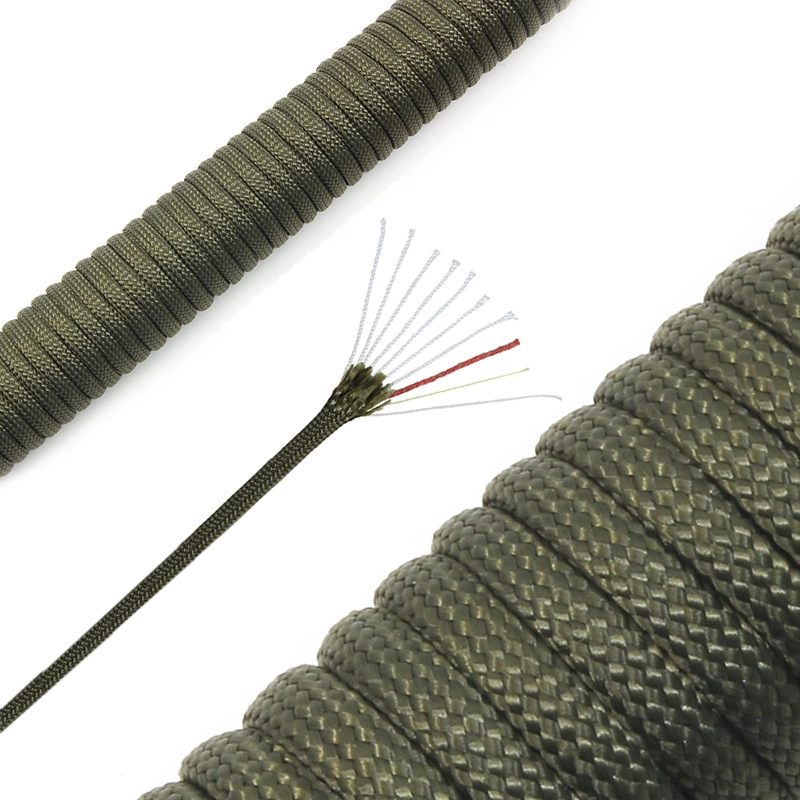
Types of paracord and their strength
Paracord is classified according to the military specification (MIL-C-5040H). The main parameters are the number of inner strands (“kern”) and load capacity. The most common types are:
- Type I – 1 core, strength approx. 45 kg.
- Type II – 4–7 cores, strength approx. 180 kg.
- Type III (550 Paracord) – 7 cores, strength approx. 250 kg; the most widely used version in EDC, survival and military applications.
- Type IV (750 Paracord) – 11 cores, strength approx. 340 kg.
Besides the standard versions, there are also specialized variations:
- Firecord – contains a tinder strand for fire-starting.
- Survival cord – includes fishing line, metal wire and tinder.
- Reflective cord – features reflective fibers for better visibility.
Why is paracord so popular?
- High strength with minimal weight.
- Fast drying thanks to nylon fibers.
- Versatility – inner strands can be separated for detailed work.
- High durability against UV radiation and abrasion.
- Thousands of uses – from emergency repairs to gear attachment.
How is paracord used in the military and EDC?
- Securing equipment on vests or backpacks.
- Emergency repairs – footwear, straps, gear.
- Replacement shoelaces (a military classic).
- Tying and building shelters.
- EDC bracelets – unravelled ones provide several meters of cord.
- Handle wraps – on knives, axes or tools for better grip.
- Carabiners, keychains, zipper pulls for bags and pouches.
Powered by Froala Editor