Alkaline Batteries
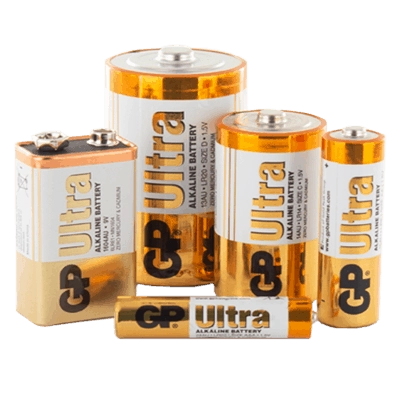
Alkaline batteries are primary (non-rechargeable) cells that use manganese dioxide (MnO₂) as the cathode and zinc powder as the anode. The electrolyte is a solution of potassium hydroxide (KOH). They are commonly available in AA, AAA, C, D, 9V, and other standard sizes.
Difference between alkaline and lithium batteries:
- Alkaline: Standard voltage of 1.5 V, lower capacity, suitable for general consumer electronics.
- Lithium: Higher performance, long lifespan, higher voltage (3 V or more), better temperature resistance.
Advantages of alkaline batteries:
- Widely available: Can be found almost anywhere.
- Low cost: Ideal for low-demand usage.
- Long shelf life: Up to 5–10 years with minimal capacity loss.
Disadvantages of alkaline batteries:
- Not suitable for high-drain devices: They discharge quickly under load (e.g., powerful LED flashlights).
- Unstable voltage: Voltage drops during discharge, which may affect device performance.
- Risk of electrolyte leakage: If left in devices for extended periods.
Powered by Froala Editor