Monocular
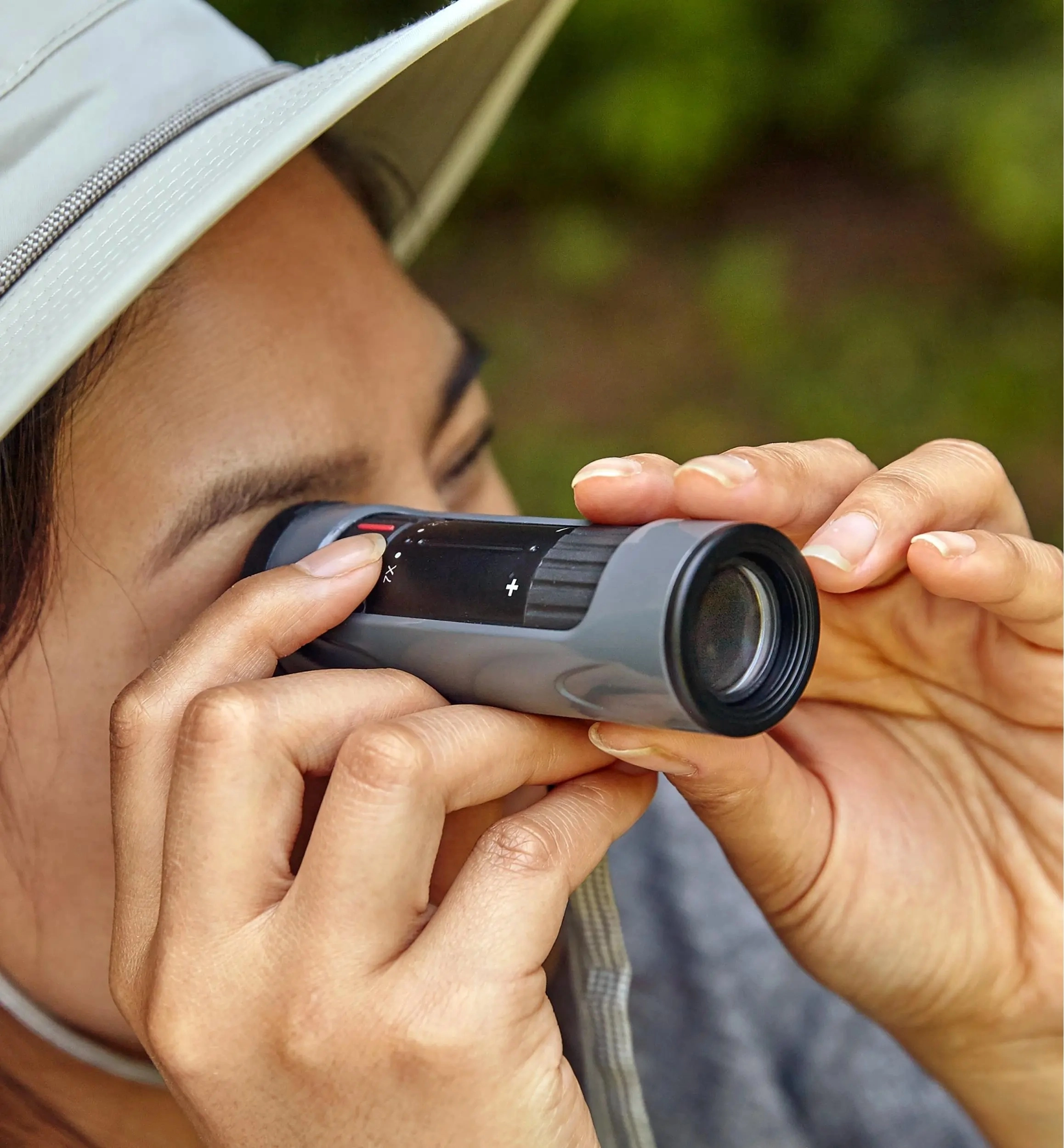
A monocular is a compact telescope with a single optical tube that allows you to magnify distant objects using a system of lenses or prisms. It works on the same principle as a traditional binocular, but instead of two eyepieces (binocular), it uses only one. Because of this, it is lighter, smaller, and easier to carry. Monoculars are popular among hikers, hunters, airsoft players, military personnel, and outdoor enthusiasts thanks to their low weight and quick one-handed use. A monocular is essentially a single-eyed telescope with a long history dating back to the earliest naval spyglasses. It is compact, lightweight, and ideal for fast observation in the field. Compared to binoculars, it is less comfortable for long viewing sessions, but excels in mobility and practicality.
History – the first monoculars and naval spyglasses
The origins of monoculars go back to the early 17th century, when the first prototypes of single-eyed telescopes appeared in Europe. Their development is tied to the same period in which the first telescopes emerged, connected with optical pioneers such as Hans Lippershey, Galileo Galilei, and Johannes Kepler. Shortly afterward, naval spyglasses began to be produced, used by ship captains for navigation, horizon scanning, and ship identification. These early monoculars were made of brass and leather and often featured a telescopic (extendable) construction.
The difference between a monocular and binoculars
- Monocular:
- One tube, one eyepiece.
- Lighter, smaller, more compact.
- Faster one-handed use. - Binoculars:
- Two tubes (stereoscopic vision).
- Better depth perception.
- More comfortable for long observation.
Advantages of a monocular
- Very low weight – ideal for pockets or vests.
- Quick deployment – suitable for military, airsoft, or hiking.
- Lower cost compared to similar binoculars.
- Compact dimensions – can be carried even in small pouches.
- Excellent for rapid scanning – terrain observation without long eye contact.
Disadvantages of a monocular
- Less comfortable for long use – strains one eye.
- Poorer depth perception – no stereoscopic 3D effect.
- Less stable image at high magnification.
Powered by Froala Editor