Fleece
Fleece is a synthetic textile material designed primarily as an insulating clothing layer. It is known for its light weight, high warmth, fast drying properties, and good breathability. Most commonly, it is used as a mid-layer in outdoor, military, and civilian clothing systems. Fleece is therefore a modern synthetic insulation material developed as a lightweight and functional alternative to wool. Thanks to its warmth, low weight, and ability to perform even when damp, it has become an essential part of outdoor and military apparel and has significantly influenced the way clothing layering is approached today. Quality fleece jackets can also be found on our e-shop, for example the PATRIOT jackets (FLEECE, MK2, and PRO Fleece) by Helikon-Tex, which rank among the most popular models among airsoft players and shooters.
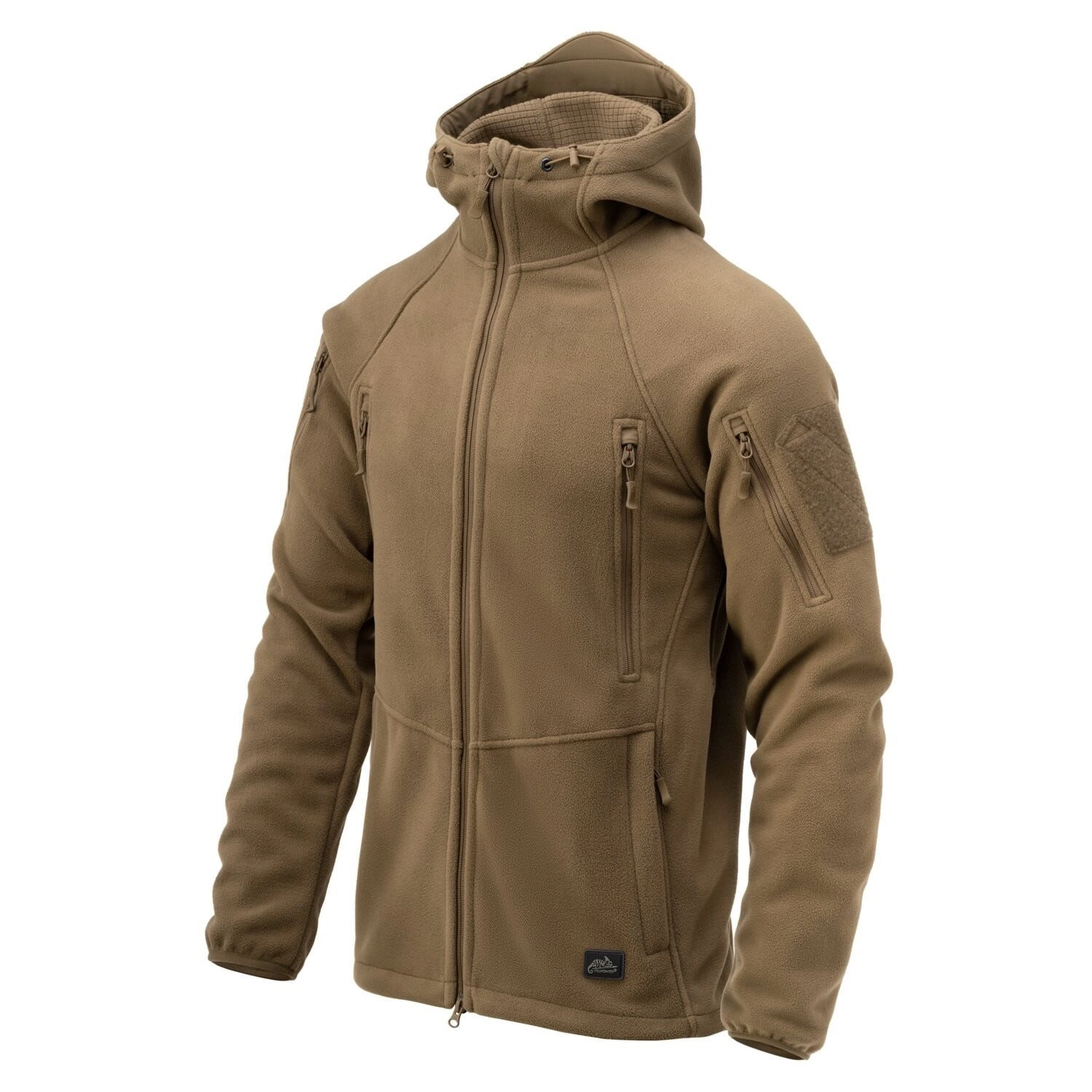
Helikon-Tex PATRIOT MK2 Hybrid Fleece Jacket
Origin and history of fleece
Modern fleece was developed in the late 1970s and early 1980s through cooperation between the American textile company Malden Mills (now Polartec) and the outdoor brand Patagonia. The goal was to create a synthetic alternative to wool that would retain warmth even when wet, be lighter, and dry faster. The first commercially successful fleece was introduced in the early 1980s and quickly spread into outdoor, military, and tactical gear.
How fleece works
Fleece is most commonly made from polyester that is mechanically brushed. This process creates a fine structure filled with air pockets that trap heat while still allowing moisture to be wicked away from the body.
Main advantages of fleece
- Insulates even when damp – unlike cotton.
- Dries quickly – ideal for physical activity.
- Lightweight and packable – suitable for layered systems.
- Breathable – helps prevent overheating during movement.
- Easy to maintain – regular washing without special care.
What was used before fleece
Before fleece became widespread, insulation layers were mainly made from:
- Wool – very warm, but heavy and slow to dry.
- Cotton – comfortable, but loses insulation when wet.
- Padded jackets – bulky and poorly breathable.
Fleece represented a major revolution in clothing layering and became a key component of modern systems such as ECWCS.
Powered by Froala Editor